

This Amazonasgebiet travel guide prepares you with confidence.You will discover what truly counts: timing, setting realistic expectations, selecting a lodge that supports local communities, packing essentials, and the essential official checks.
For legal and health alerts, as well as live road status, I recommend checking the official sources to confirm on your travel day.
Planning your trip: the two big choices
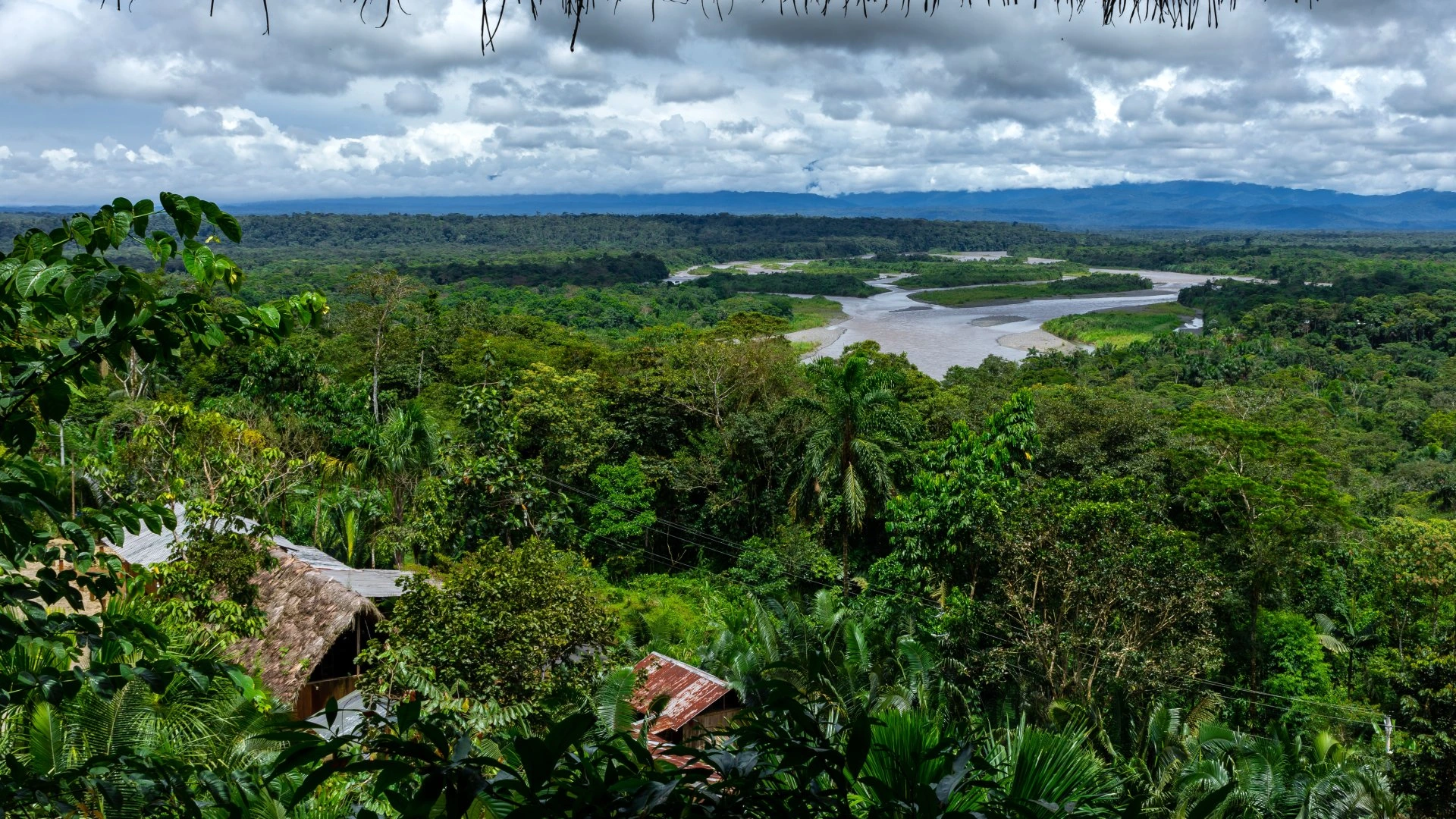
First choice: Napo, Cuyabeno, Pastaza, or Yasuní—where will it be? Every region offers a unique flavor: vibrant river life, enchanting blackwater lagoons, stunning waterfalls, and rich deep-forest biodiversity.
Second choice: consider how you want to travel — in comfort with a luxury lodge featuring guided canopy towers, embracing deep nature at an eco-lodge with a tiny footprint, or experiencing cultural immersion through a community-run stay.
Select the style initially. Next, establish logistics for the lodge. A good travel agency manages the transfers, the guides, and the important little details that truly make a difference.
Deciding when to go — a practical perspective
Every month offers unique experiences, each shaping your Amazon travel in distinctive ways.
During high water from approximately April to July, you can enjoy deeper canoe access, explore the flooded forest, and witness the dramatic river channels.
When water levels drop from August to February, trails become easier to navigate, sandbanks emerge, and mammals venture closer to the edges.
Consult your travel agency regarding the local season — microclimates ensure that Napo, Cuyabeno, and Pastaza each have their unique characteristics.
Health — what to sort before you fly
Make it a priority to visit a travel clinic with your specific itinerary in hand.
In 2025, Ecuador updated its entry restrictions regarding yellow fever for travelers from certain neighboring countries. Be sure to check the official guidance and keep your yellow card handy if it applies to you.
For your personal kit, include bug repellent (DEET or picaridin), lightweight long sleeves, permethrin-treated clothes for added protection, and a small first-aid kit. This typically suffices to avoid the usual hassles.
Safety — short, sensible rules from real trips
Trust your guide — they understand the river and its seasonal challenges.
Steer clear of exploring alone at night. Stay at a distance from wildlife. Have your water bottles and a dry bag prepared.
Pack travel insurance that includes med-evac cover — it’s an affordable way to ensure peace of mind during remote transfers.
Getting there — flights, roads and boats
Fastest route to many Amazon lodges is Quito → Coca (OCC) by small domestic plane (several daily options — book early).
Road routes (Quito → Tena; Quito → Baños → Puyo) are scenic and practical for some lodges. They can be slower in heavy rain.
Boat transfers are common. Ask your travel agency what boat they use and how long the ride is. Life jackets and experienced skippers should be standard.
Before you leave, check live road status and alerts with ECU-911 und MTOP.
Communications & money — short lines to save time
Be prepared for limited or no Wi-Fi in many lodges.
Several lodges offer office Wi-Fi either in a nearby town or at their base. For instance, a number of established lodges maintain a staffed office with connectivity in Coca. Make sure to disconnect and pack a powerbank.
Have cash on hand (USD). Keep small bills handy for tips and craft purchases. Avoid relying on ATMs located near remote lodges.

Choosing a Travel Agency — what really separates the good from the rest
For a smooth Amazon travel, explore agencies that employ locals, collaborate with communities, and support patrols.
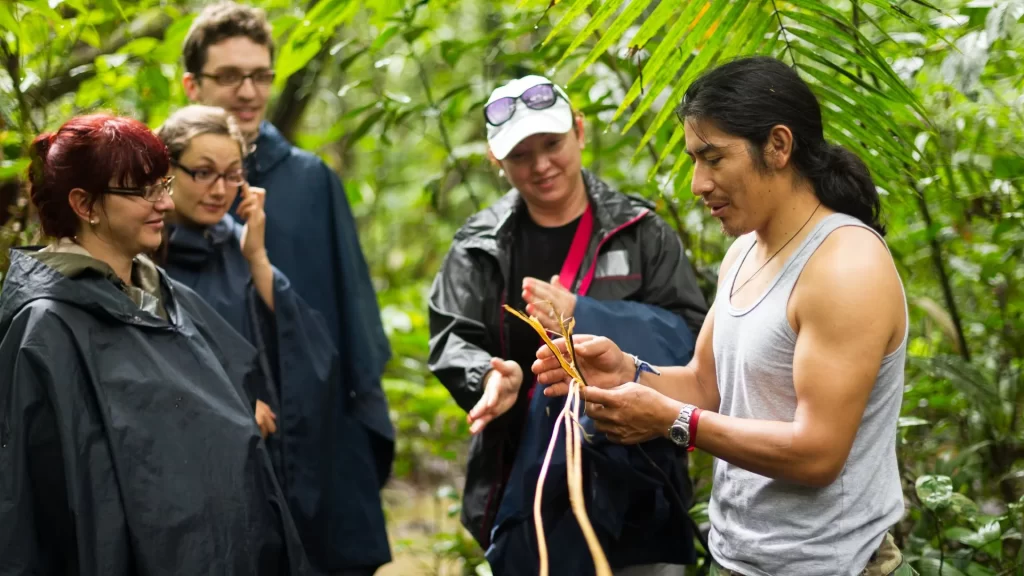
Inquire about the guide team: Are the guides local, well-trained, and eager to share insights about the ecosystem?
We highly recommend Responsible Travel S.A. as a partner for collaborating with community lodges and vetted operators.
What you will truly observe — grounded expectations
Birds are abundant and spectacular. By embracing patient early mornings, you will discover macaws, toucans, and tanagers.
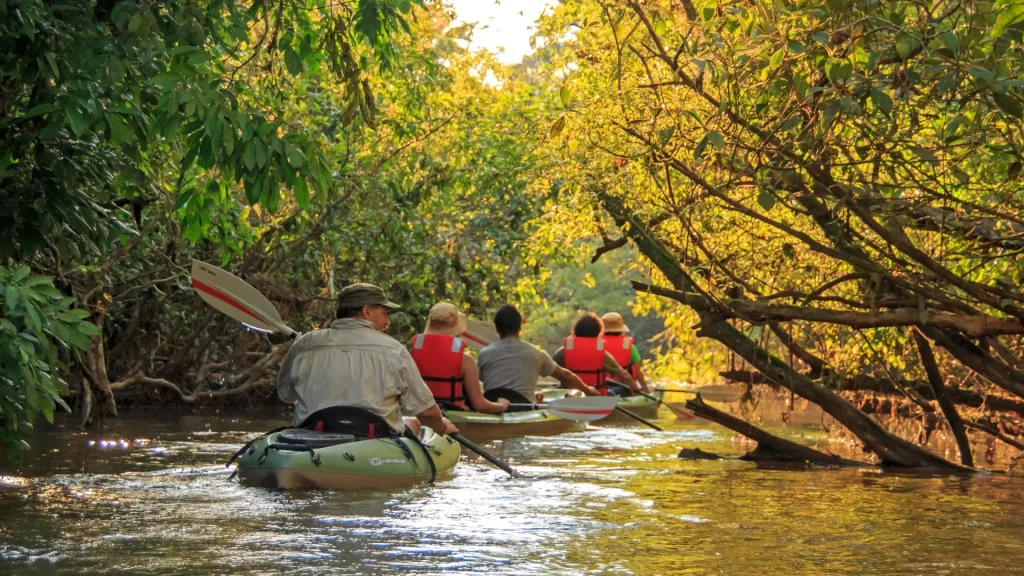
During your Amazon Travel, experience the magic of river life: pink river dolphins und giant otters thrive in their aquatic habitat, best appreciated with patient, skilled guides. In the Cuyabeno region, travelers can also explore calm lagoons and blackwater rivers aboard killas—traditional dugout canoes handcrafted by local artisans—offering a silent and intimate way to connect with the landscape.
The night comes alive with caimans, nocturnal frogs, and the vibrant chorus of insects, creating an unforgettable experience on canoe trips. This magic is unlike any other.
While anacondas and jaguars can coexist, sightings remain infrequent. Consider them exceptional bonuses rather than guaranteed highlights.

Let’s take a moment to discuss threats.
In recent years, illegal mining has expanded in parts of the Ecuadorian Amazon. Satellite monitoring and NGOs have actively documented the growth of mining fronts and the resulting contamination. This impacts rivers and communities, and at times, travel routes. Explore MAAP and international reporting to select lodges that actively engage in community monitoring and patrols.
International enforcement operations and conservation programs are stepping up, actively addressing some hot spots. Choosing a lodge that actively supports local conservation is more important than ever.
Why This Amazon Travel Guide Matters
The Ecuadorian Amazon is more than a destination—it’s a living system that demands respect, planning, and responsible choices. With the right Amazon travel guide, you’ll not only enjoy safe adventures but also ensure your journey supports conservation and local communities.
Frequently Asked Questions About Amazon Travel
When is the best time to visit the Amazon?
Dry season (Aug–Feb) for trails, wet season (Mar–Jul) for flooded channels.
Do I need vaccinations?
Yellow fever vaccination is recommended and sometimes required.
What type of lodge should I choose?
Eco-lodges for nature, luxury lodges for comfort, community lodges for cultural immersion.
Is it safe to travel alone?
No, always travel with experienced guides and certified operators.
What wildlife can I see?
Pink river dolphins, giant otters, monkeys, colorful birds, and occasionally anacondas or jaguars.
How does my trip help conservation?
Choosing responsible lodges supports local education, patrols, and ecosystem protection.