

Imagine your first night in the Amazon. The darkness seems almost solid. You expect to hear noise, a chaotic roar, but instead you perceive a silence that gives you goosebumps. Then, little by little, the sounds arrive: a single distant cry, then a buzzing of insects, and then a layered chorus that becomes almost musical.
This is the soundscape you came to experience, and the moment when the bioacoustics of the Amazon take center stage.
The guide’s first secret: a noise that hides a song
Your guide doesn’t point things out to you. He teaches you to listen.
“Don’t look first,” he’ll say. “Close your eyes and learn the pattern: the high-pitched trills, the low roars, the regular beats.”
At first, it’s all texture. After a few sunrises, you begin to distinguish the instruments: a bell-like note, a repeated trill, the percussive chirp of a frog… and the apparent randomness of the jungle becomes an orderly symphony.

The concerts of the day: dawn and dusk
The melody of dawn
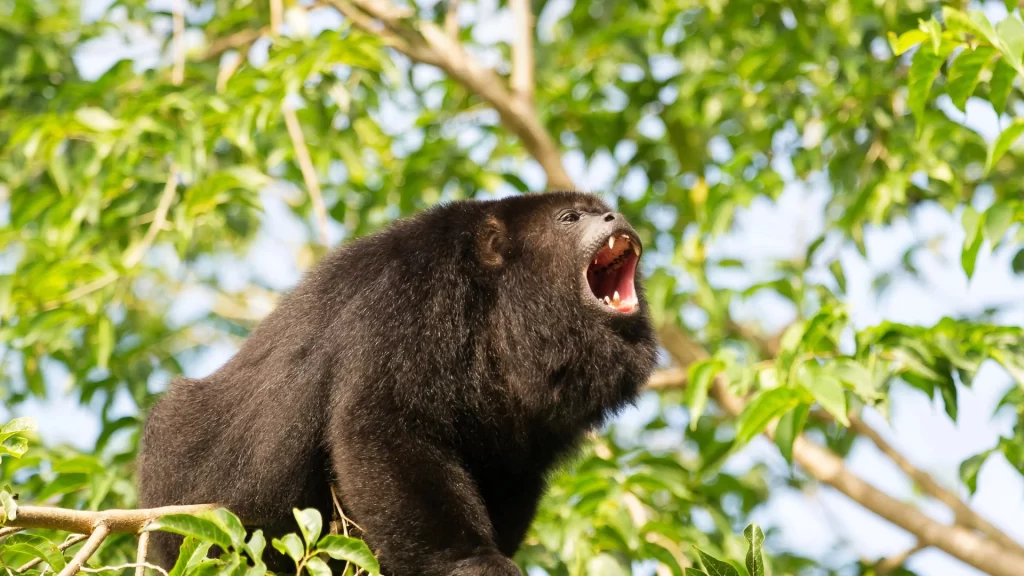
Before dawn, the chorus is sparse and precise. The deep cry of a howler cuts through the air and seems to clear the space for the birds to join in.
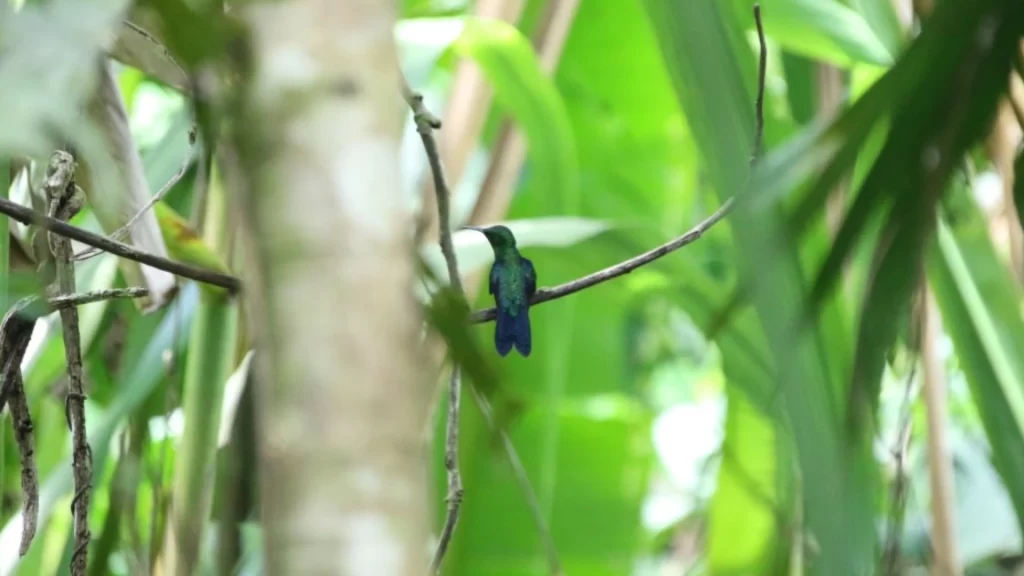
Hummingbirds add a fine, bright thread; parrots paint broad colors with their sound.
The dawn chorus is rhythmic: first low, then lively, then a flutter and a murmur announcing the start of the day in the forest.
The evening festival
At dusk, the daytime protagonists give way to the nighttime ones. In the canoe, you float like a shadow while frogs et insects weave a web of clicks and croaks.
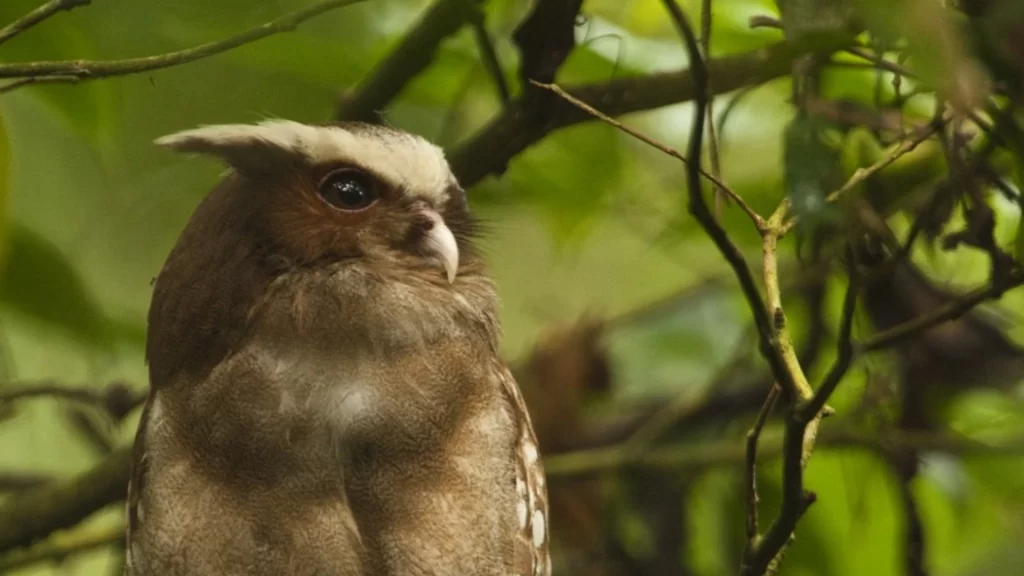
Owls et nightjars punctuate the weaving; sometimes, the distant snort of a mammal makes the entire canopy tremble. The nighttime concert is intimate, close to the water; it feels as if the forest is breathing around you.
Bioacoustics: nature’s secret language
Bioacoustics is the science of life through sound: researchers record, analyze, and interpret the chorus to learn what a forest is saying. Passive acoustic monitoring, which involves placing recorders in tree canopies, allows scientists to measure animals that are difficult to detect.
Studies conducted in Ecuador and throughout the Amazon show that soundscapes reveal the recovery and stress of forests, and that acoustic data, combined with other tools, can map the health of ecosystems.
How do they do it?
You don’t need a PhD to detect patterns. A loud and varied morning chorus often means that many species are present. A sudden drop in frog croaking can be a warning sign. Scientists use acoustic indices and machine learning to convert these human observations into conservation metrics.
The equipment is simpler than you might think: compact recorders capture weeks of sound for analysis.
What sound tells you
- A rich, multi-layered chorus → healthy, diverse community.
- Dominance of a few loud species → possible imbalance or disturbance.
- Prolonged silence at expected times → presence of predators or human disturbance.
- Changes in tempo or pitch → effects of temperature, season, or pollution.
(Researchers combine these acoustic signals with satellite and field data to assess forests on a large scale).
Soloists you won’t forget
The bellbird
Wait for that pure, resonant, metallic sound that echoes through the treetops. Bell birds (Procnias spp. and related species) emit a striking song, similar to the sound of a bell, that carries over long distances; one Amazonian species even holds the record for the loudest bird song ever recorded. When you hear it, everything stops to listen.

The glass frog’s tinkle
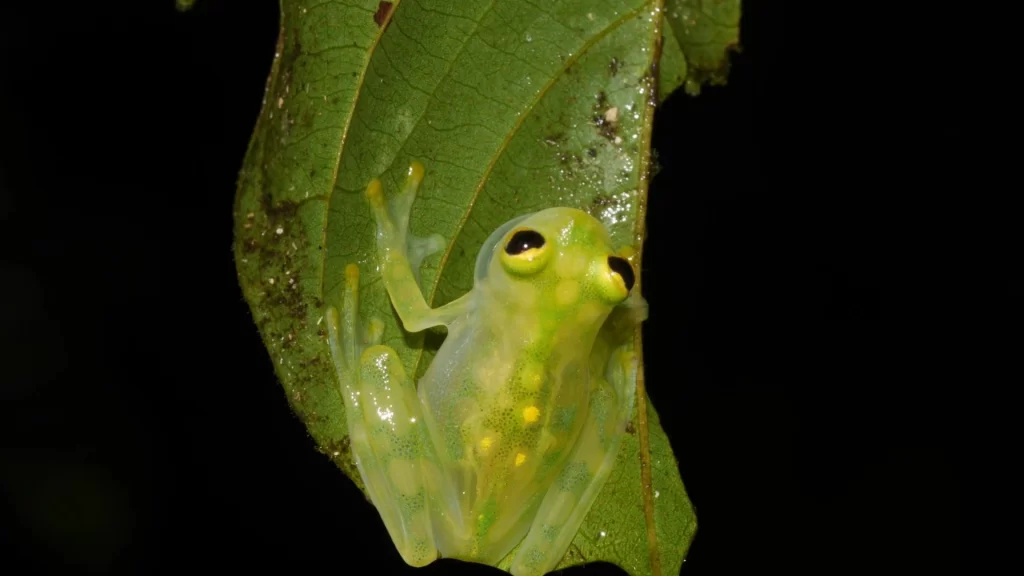
At night, the chorus of glass frogs is almost crystalline: a delicate, repetitive song that comes from the leaves hanging over streams. These tiny amphibians sound fragile and make the night seem like a fragile glass bell.
Glass frogs are also sensitive to changes in their habitat; their soundscapes have been used as early warning signals when mining or pollution pressures increase.
The lantern cricket and the chorus insects
You will notice repetitive chirps that sound like flashing lanterns. Crickets and cicadas create the buzz and pulse; their abundance gives the forest its underlying rhythm. Listen to the tempo changes and you will begin to distinguish one place from another.

Listening with purpose: what your visit supports
If you want to dig deeper, ask your guide if the lodge participates in acoustic monitoring, if they use standard recorders, and how local communities benefit from the research. That little conversation helps ensure that tourism supports science and conservation.
The value of listening: your mission in the Amazon
At the end of your trip, you will not only have photos, but also memories marked by sounds. You will learn to perceive the spaces between the notes and the stories told by those silences.
Protecting that invisible concert means supporting community vigilance, avoiding disturbing noises at night, and choosing operators who respect the rhythm of the forest.
Sit down. Listen. Tell others what you have heard.
The forest sings for the future, and your attention is one of the simplest ways to keep the music playing.

Keep learning: For practical details about travel visit our Amazon Travel Essentials guide