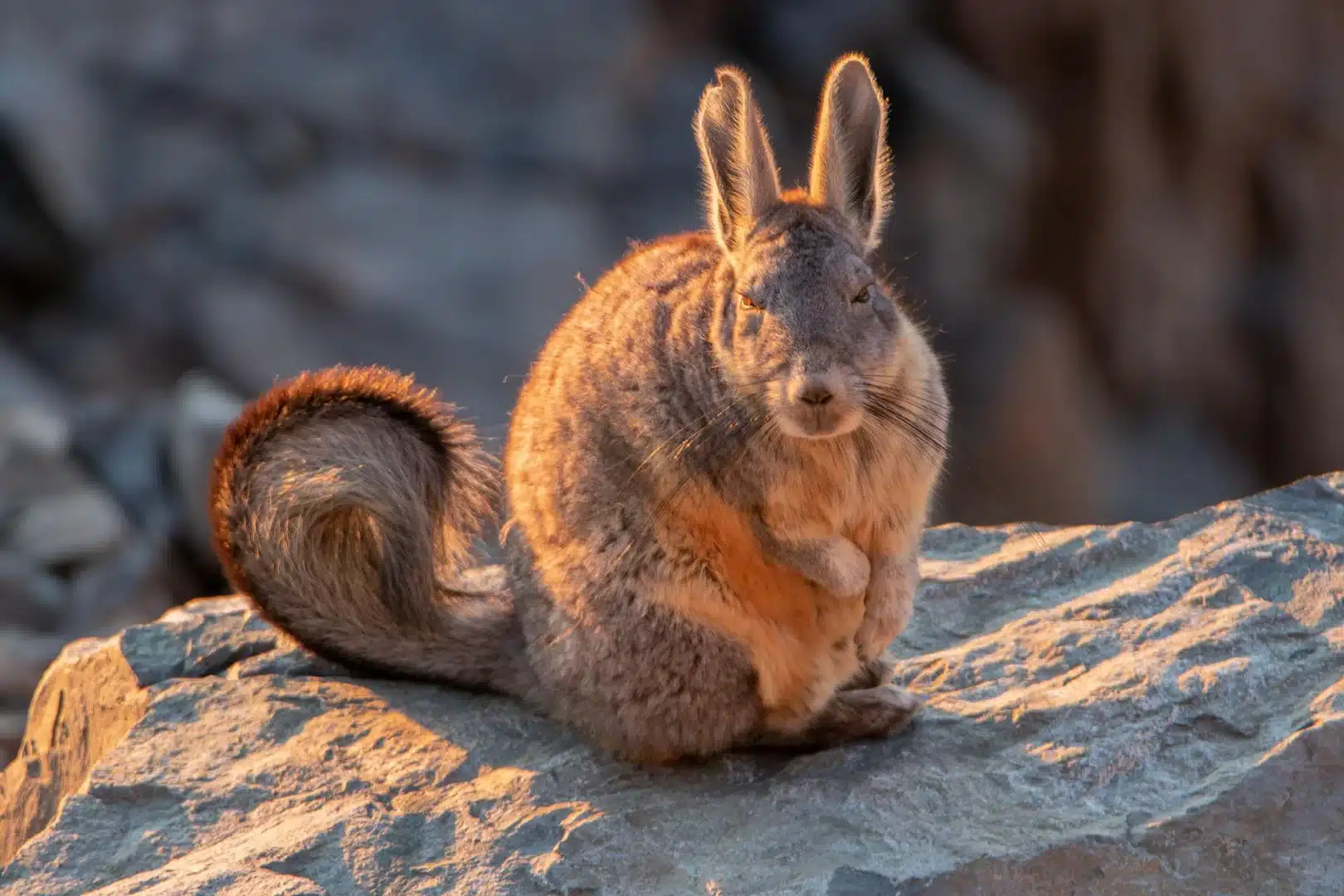
The Ecuadorian vizcacha is a rare, agile Andean mammal adapted to rocky terrain. Its history is intertwined with the conditions of the landscape, where rocks, high altitude, and tranquility are part of its daily life. The species is recognized as endemic to Ecuador and is associated with the area of Cerro El Ahuaca, in Loja.
I’ll explain why its habitat is so limited, what makes it distinctive among South American vizcachas, and what is known about it. Understanding this species requires looking at its habitat and its value. Because of its restricted circulation, every piece of data about it is a discovery.
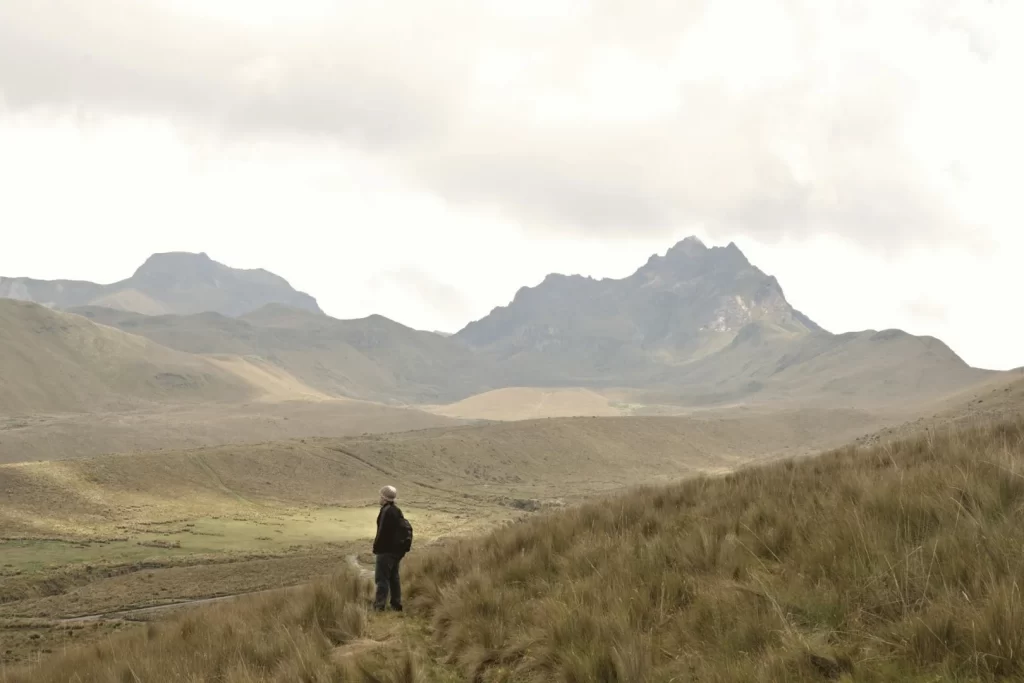
The vizcacha that made the rock its world
| Fact | Información |
| Scientific name | Lagidium ahuacaense |
| Common name | Ecuadorian vizcacha |
| Known range | Southern Ecuador, associated with Cerro El Ahuaca |
| Status | Endemic to Ecuador |
Information based on the official list of mammals of Ecuador (AEM, version 2025.1) and the scientific description of the species published in 2009.
The Ecuadorian vizcacha is an Andean rodent:
- The only species of this family recorded in Ecuador
- Dense coat, generally grayish to brown
- Rounded, prominent ears
- Long, bushy tail
- Long whiskers adapted to its environment
- Agile body, adapted for jumping and moving among rocks
- Primarily active during the day (diurnal)
- Herbivorous diet (plants, grasses, mountain vegetation)
- Associated with rocky environments in southern Ecuador
- Recorded mainly in the Cerro El Ahuaca area
- Approximate elevation: between 1,900 and 2,500 m a.s.l.
The species was scientifically described in 2009 based on specimens recorded at Cerro El Ahuaca, in Loja.
What makes it so unique is not only its appearance but also its scale. In Ecuador, within the Chinchillidae family, this is the only recorded species and is also endemic, meaning it is native to the country. It is also known to have a very concentrated distribution around Cerro El Ahuaca, which distinguishes it from other South American vizcachas with much broader ranges.
What Makes Cerro El Ahuaca Special
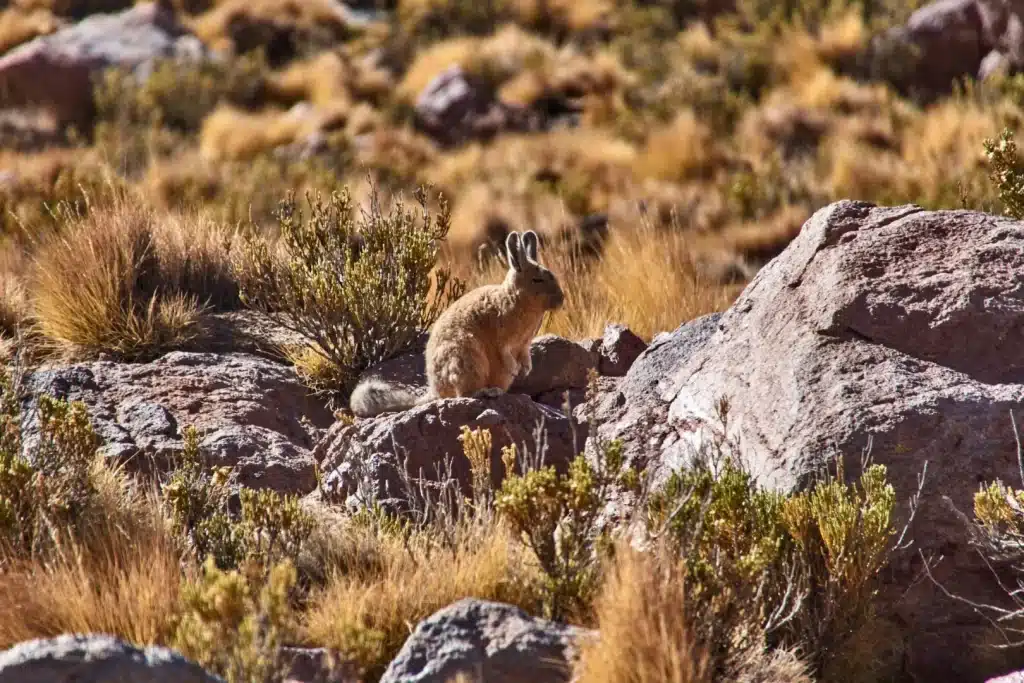
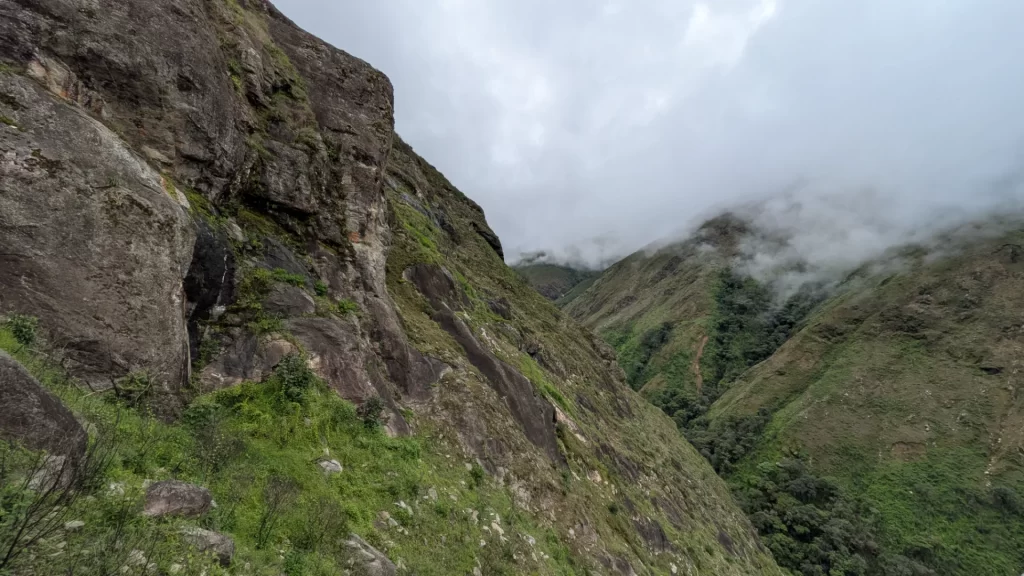
Cerro El Ahuaca is described in the literature as a steep, granitic peak, of the inselberg type, very close to Cariamanga. There, the vizcacha has been recorded across the hill’s altitudinal range, approximately between 1,950 and 2,480 meters, but always associated with extensive rocky surfaces. This information is very important, because we are no longer talking just about “a mountain,” but about a very specific physical structure.
This landscape offers it several things at once:
- exposed rock for moving around and keeping watch,
- cracks and cavities for shelter,
- dry slopes with vegetation adapted to that environment,
- a combination of altitude and inter-Andean climate that is part of its ecological routine.
Between El Ahuaca and Loma Delgada
El Ahuaca Hill was the site where the species was first identified. It is the primary reference point, the place where its scientific record began. Loma Delgada, on the other hand, lies within the same territorial context in Loja, with similar conditions regarding elevation, rock, and environment.
They are not the same site, but they are part of the same type of landscape. They can be understood as related areas, where the terrain structure and ecological conditions share similar characteristics. Therefore, when discussing the vizcacha, the focus begins to expand beyond a single point.
Loma Delgada is not an ecological reserve officially designated by the government.
It is an area identified as key for conservation, where long-term protection is being sought through initiatives led by the Fundación Amazonía Productiva. This means its value is already recognized, although its legal status is still in the works.
Why Not Just Any Mountain Will Do
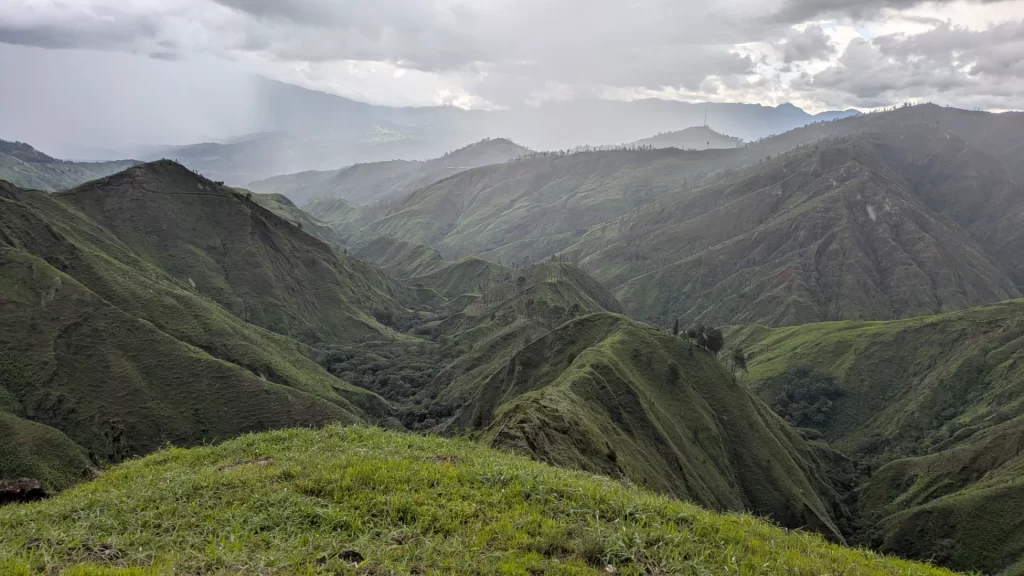
Here is one of the most interesting points: not every Andean mountain possesses the same combination of rock, orientation, shelters, and local conditions. In the case of the Ecuadorian vizcacha, published evidence links it closely to the rocky environment of El Ahuaca, and the known population has even been described as possibly consisting of just a few dozen individuals. This suggests a species highly adapted to a specific landscape.
What happens if that environment changes even slightly
For a species with such a localized presence, small changes can have a major impact. If the rocky surfaces, crevices, nearby vegetation, or the tranquility of the environment are altered, the balance that sustains it also changes. That is why the Red Book of Mammals of Ecuador lists it in a high-threat category, and why the conversation about conservation here always comes back to this specific location.
What can affect this place
In an environment like this, the activities that have the greatest impact are those that alter land use or the structure of the landscape.
Among the main ones:
- land disturbance from extractive activities
- fires that reduce vegetation cover
- agricultural expansion without proper management
- road construction or habitat fragmentation
These are changes that aren’t always immediately visible, but over time they alter the balance of the area.
How you can help
There are direct ways and simpler ways to contribute.
- support initiatives like those of the Amazonía Productiva Foundation
- learn about and share these types of projects
- choose responsible experiences if you visit the area
Sometimes, understanding the value of a place is already part of the support.
Can you get up close?
Yes, but it’s not a guaranteed experience.
The Ecuadorian vizcacha is not an easy species to observe. Its behavior and the type of terrain where it lives mean that spotting it depends on many factors: time, patience, and the right conditions.
What is possible is to get close to the landscape where it lives, explore these areas with respect, and begin to understand why this place matters so much.