

Ecuador appears compact on the map; however, its terrain and climate shift with remarkable speed. The Andes mountain range stretches from north to south, showcasing a remarkable diversity of landscapes within a compact area. You can find temperate valleys, high-altitude moors, high-Andean lakes, cloud forests, and volcanoes that dramatically shape the horizon. This compact territory showcases how variations in elevation transform the vegetation, shift the temperature, and enhance the journey experience within just a few hours.
That is why talking about Ecuador’s volcanoes requires more than just an image of snow-capped peaks. Along the so-called Avenue of the Volcanoes, a name popularized in the 19th century by Alexander von Humboldt, an Andean corridor unfolds where the country boasts more than 70 volcanoes and mountains, along with glaciers and protected areas that shift landscapes within a few kilometers.
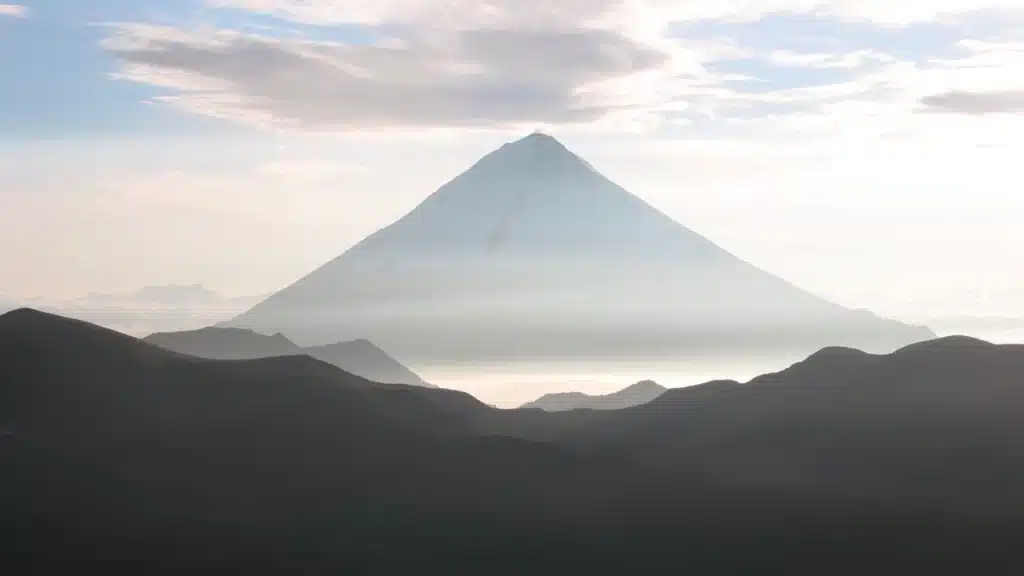
Five volcanoes that help you understand the grandeur of Ecuador
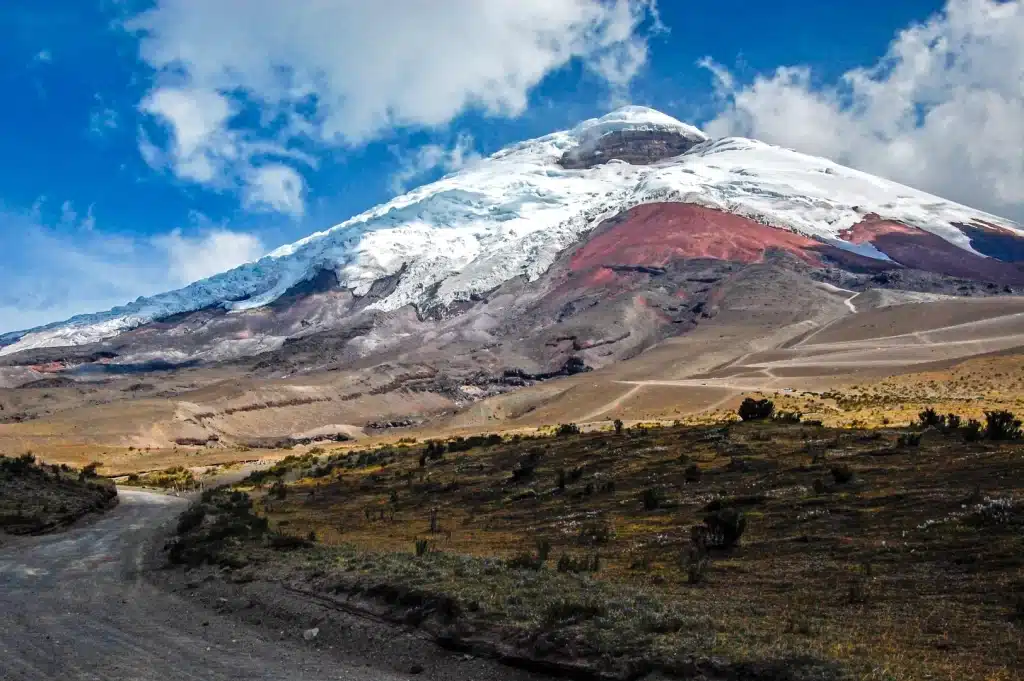
Cotopaxi: the perfect shape of a volcano
Cotopaxi comes up time and again in any conversation about Ecuador’s mountains. Its nearly symmetrical cone has made it one of the country’s most recognizable images, but its power goes beyond aesthetics. At nearly 5,900 meters in elevation, it dominates a landscape of high-Andean plains, grasslands, and páramo wildlife. Its surroundings allow you to approach the mountain from different angles: a visit to Limpiopungo Lake, a hike to the refuge, or a more technical ascent for those with high-altitude experience.
Cotopaxi helps us understand something very Ecuadorian: the mountain as an emblem. From afar, it commands respect. Up close, it shifts the scale of the body and the landscape. It is one of those volcanoes that quickly teaches us that altitude in Ecuador is not merely to be contemplated; it is to be confronted.
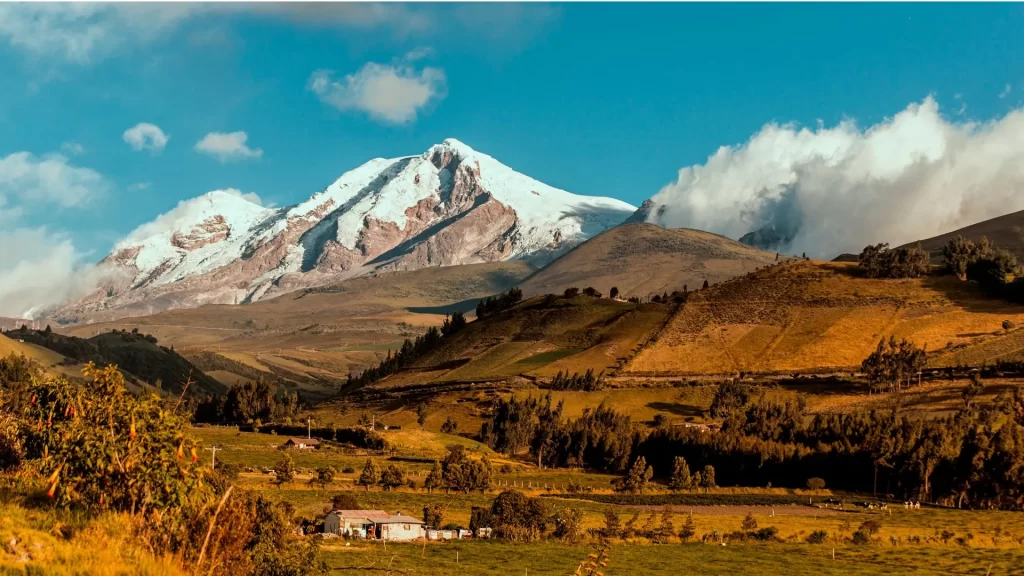
Chimborazo: the summit that changes the scale
Chimborazo has a different kind of presence. Its volcanic mass does not captivate through the perfection of its cone, but through a sense of vastness, barrenness, and geographical weight. At over 6,200 meters, it remains Ecuador’s highest peak and one of the mountains that most arouses curiosity due to its extreme position on the planet.
Its landscape is harsher, more open, and more demanding. There, the journey quickly ceases to feel like a tourist trip. The air becomes a factor, the body responds differently, and the environment forces one to take the mountain seriously. Chimborazo reveals another side of the Ecuadorian Andes: that of altitude as a limit.
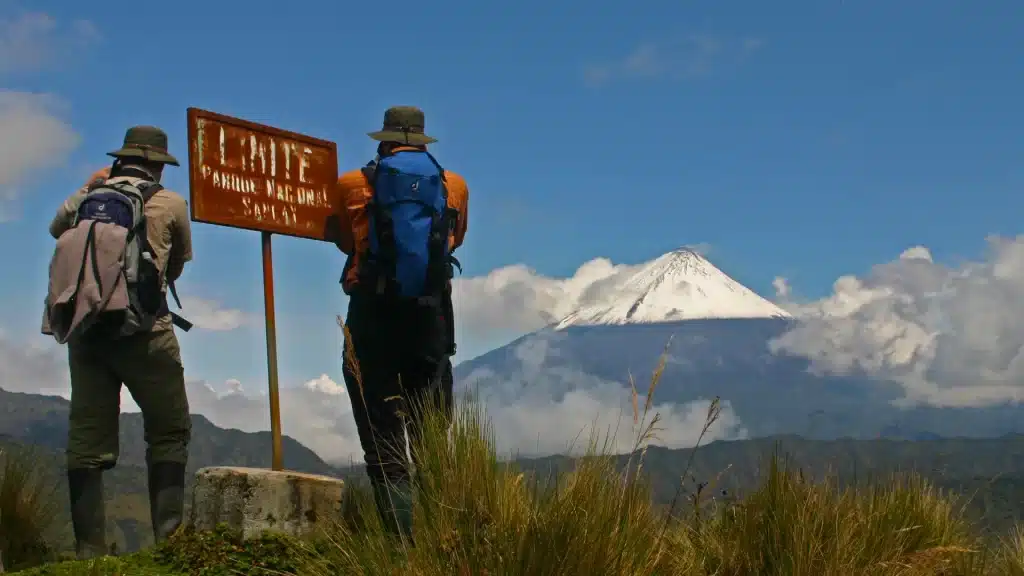
Sangay: the volcano where the mountain is still in motion
Sangay introduces a different concept to the Andean landscape: the mountain as an active and remote territory. Its national park encompasses volcanoes, rainforests, high moors, and an ecological verticality that shifts with remarkable speed. Here, the adventure ceases to revolve solely around a summit and begins to depend on isolation, the weather, and the complexity of the terrain.
What makes Sangay special is that blend of volcanic power and biodiversity. It is not a mountain that can be fully grasped in a single visit or along a single route. It has something more rugged, more wild, more closely tied to the idea of an Ecuador where geography still pushes the traveler beyond comfort.
Antisana: altitude, condors, and silence
Antisana doesn’t usually appear at the top of the most commercial lists, and perhaps that’s why it’s so surprising. Its presence is immense, but the surrounding landscape feels quieter and less disturbed. The páramo here has a very pure power: lagoons, grasslands, wide-open skies, and one of the best areas in the country for observing Andean condors and other high-altitude wildlife.
Antisana helps us understand that a mountain can also make an impression without excessive infrastructure or crowds. Its appeal lies in the combination of open landscape, silence, and high-Andean vegetation, where species such as the chuquiragua and romerillo also appear. For many travelers, this blend leaves a deeper impression than any overly familiar image.
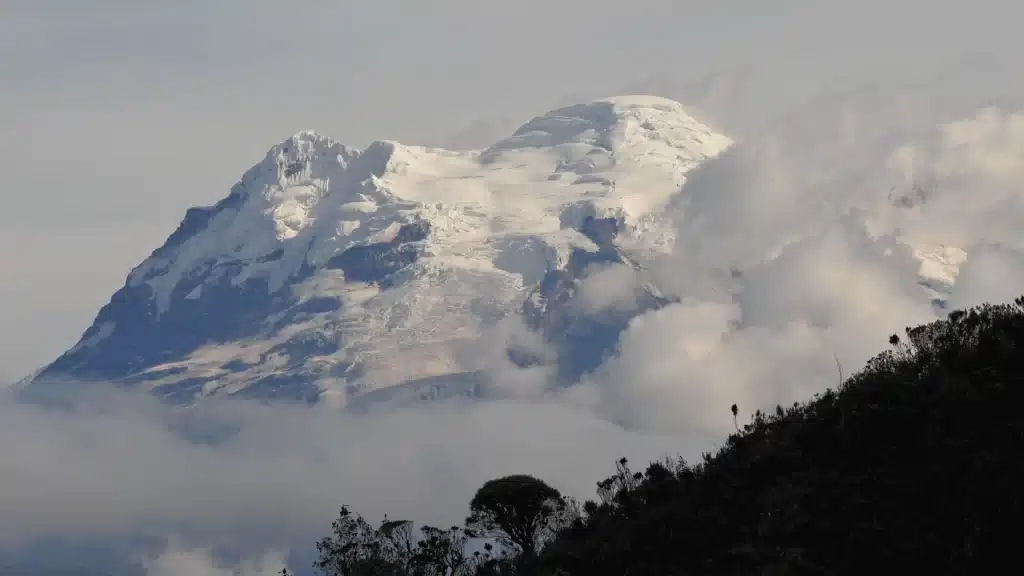
Cayambe: the volcano where altitude meets the equator
Cayambe possesses a uniqueness that makes it impossible to ignore: it is the country’s great equatorial snow-capped peak, a mountain where the equator and snow coexist in the same narrative. That idea alone gives it immense power, but the place offers much more: a sense of altitude that shifts as the landscape opens up, and an environment where species such as the Andean bear, the puma, and the Andean tapir appear.
It is a volcano that combines geographical, visual, and ecological significance. From afar, its profile is easily recognizable. From within, it reveals another important lesson about Ecuador: the mountain here does not follow a single logic. It can be a volcano, a water reservoir, a sensitive ecosystem, and a wildlife refuge all at the same time.
What travelers should know before going
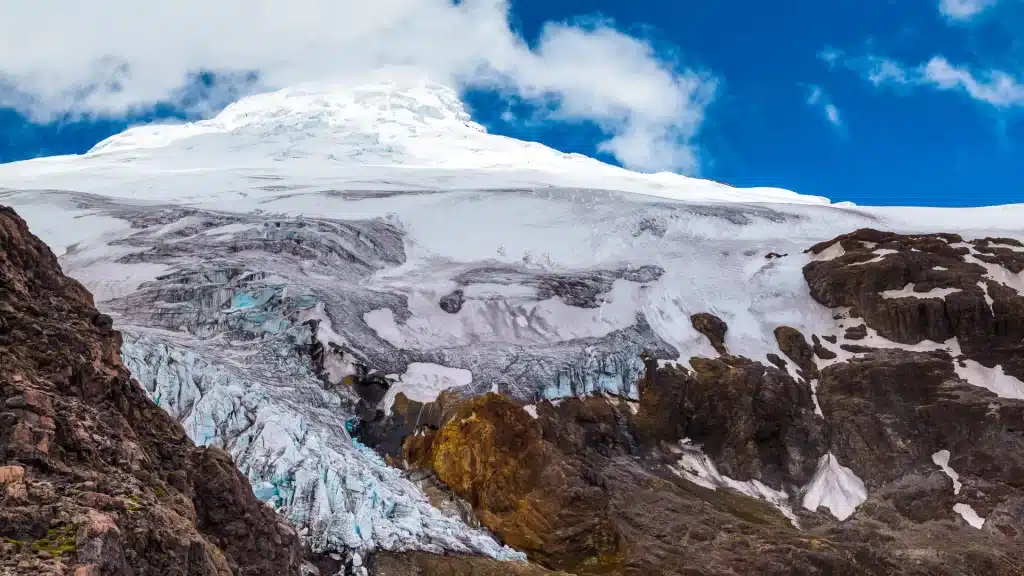
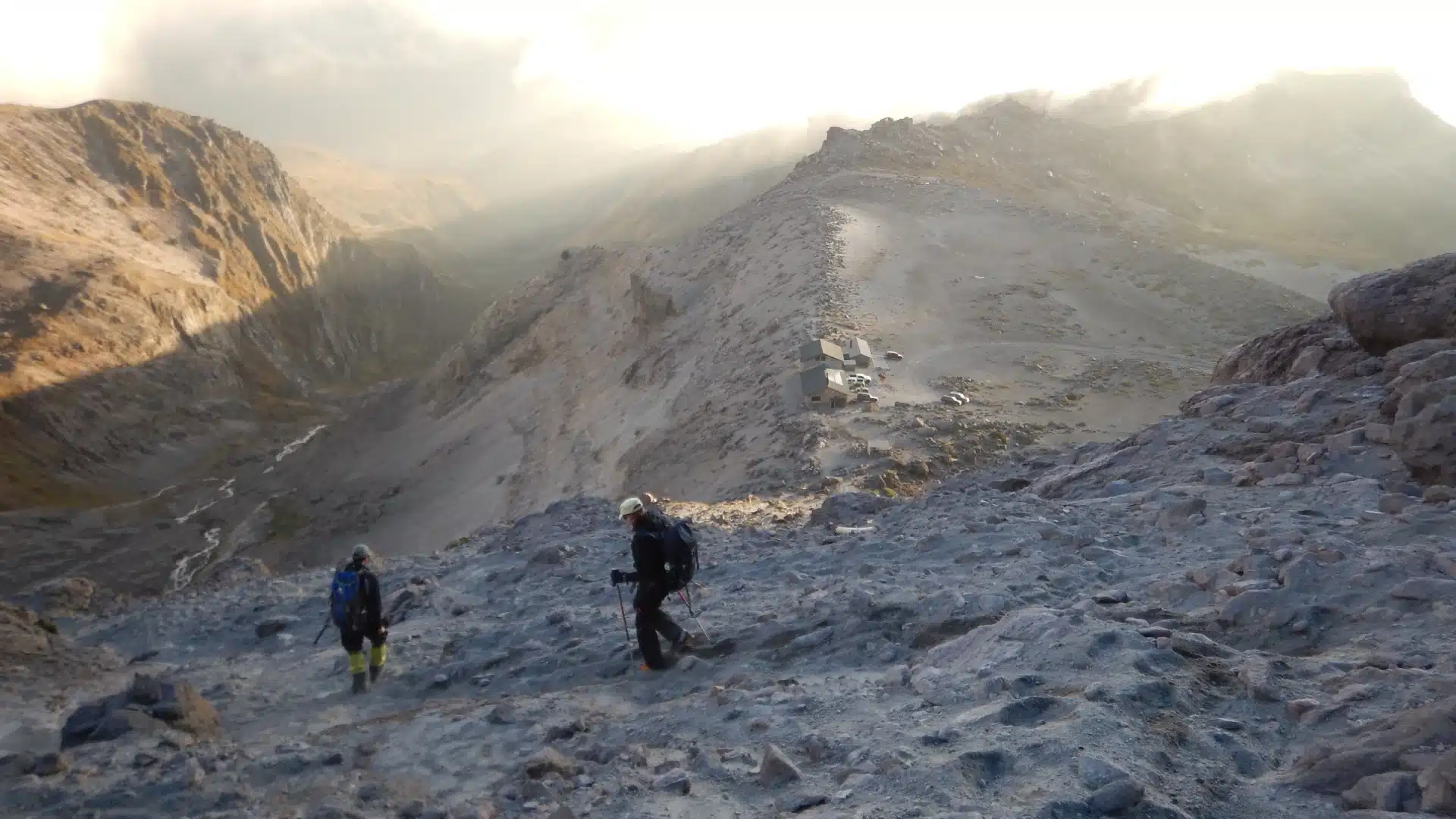
Visiting Ecuador’s volcanoes needs more than just excitement. Many of these locations are higher than 4,800 meters, and at this height, not adjusting properly, being physically unprepared, or having bad planning can lead to serious issues. Altitude sickness, cold weather, tiredness, and quick changes in weather are important factors that should not be ignored.
That is why it is important to tell the difference between a scenic visit and a mountain hike. Strolling around a high-altitude lake is different from trying to get to a mountain hut or reaching a peak. Before you leave, it’s smart to check the altitude, weather, gear, hydration, and your physical health. The journey of responsible adventure starts with realizing that these volcanoes are both amazing and challenging.
Why Ecuador’s volcanoes matter so much
Ecuador’s volcanoes captivate with their striking silhouettes and the dynamic landscapes they forge. Their presence actively shapes the country’s biodiversity, surrounding them with páramos, wetlands, high-Andean forests, and habitats where species adapted to high altitudes flourish. The Ecuadorian Andes showcase an impressive concentration of diversity within a compact area, and that’s precisely why they are so fascinating.
This topic consistently captivates interest for this very reason. These volcanoes showcase how a small country can embrace diverse climates, elevations, and lifestyles that shift from one region to another. Viaggio responsabile invites you to discover them for their grandeur and the insights they offer into Ecuador’s landscape, biodiversity, and natural depth.
Domande frequenti About Ecuador’s Volcanoes
How many volcanoes are there in Ecuador?
Ecuador has more than 70 volcanoes and mountains, many of them located along the Andean corridor known as the Avenue of the Volcanoes.
What is the highest volcano in Ecuador?
Chimborazo is the highest peak in Ecuador and one of the most emblematic mountains in the country.
Why is Cotopaxi so famous?
Cotopaxi is famous for its nearly perfect conical shape and for being one of the most iconic volcanoes in Ecuador.
Can travelers visit Ecuador’s volcanoes without climbing them?
Yes. Many volcanoes can be appreciated through scenic viewpoints, lakes, trails, and refuge visits without attempting a summit.
What should travelers know before visiting Ecuador’s volcanoes?
Altitude, weather, and physical condition matter a lot. Even short visits can be demanding at high elevations.
Which volcano is crossed by the equator?
Cayambe is especially known because it is the snow-capped volcano associated with the equatorial line.
Why are Ecuador’s volcanoes important beyond their beauty?
They help shape landscapes, support biodiversity, and protect high-altitude ecosystems such as páramos and wetlands.